analoger_Widerstand
Turning surveillance into sound & oscilloscope patterns
Description
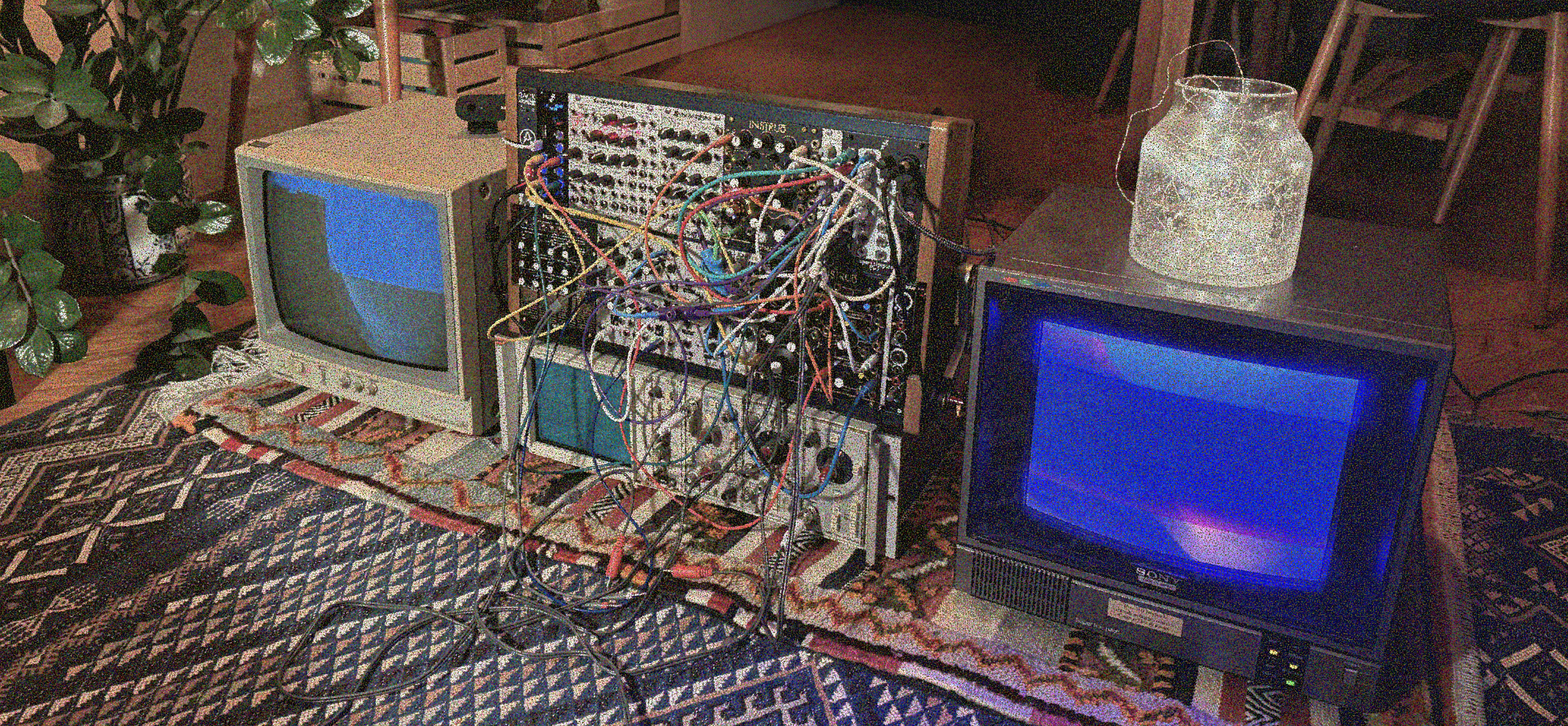
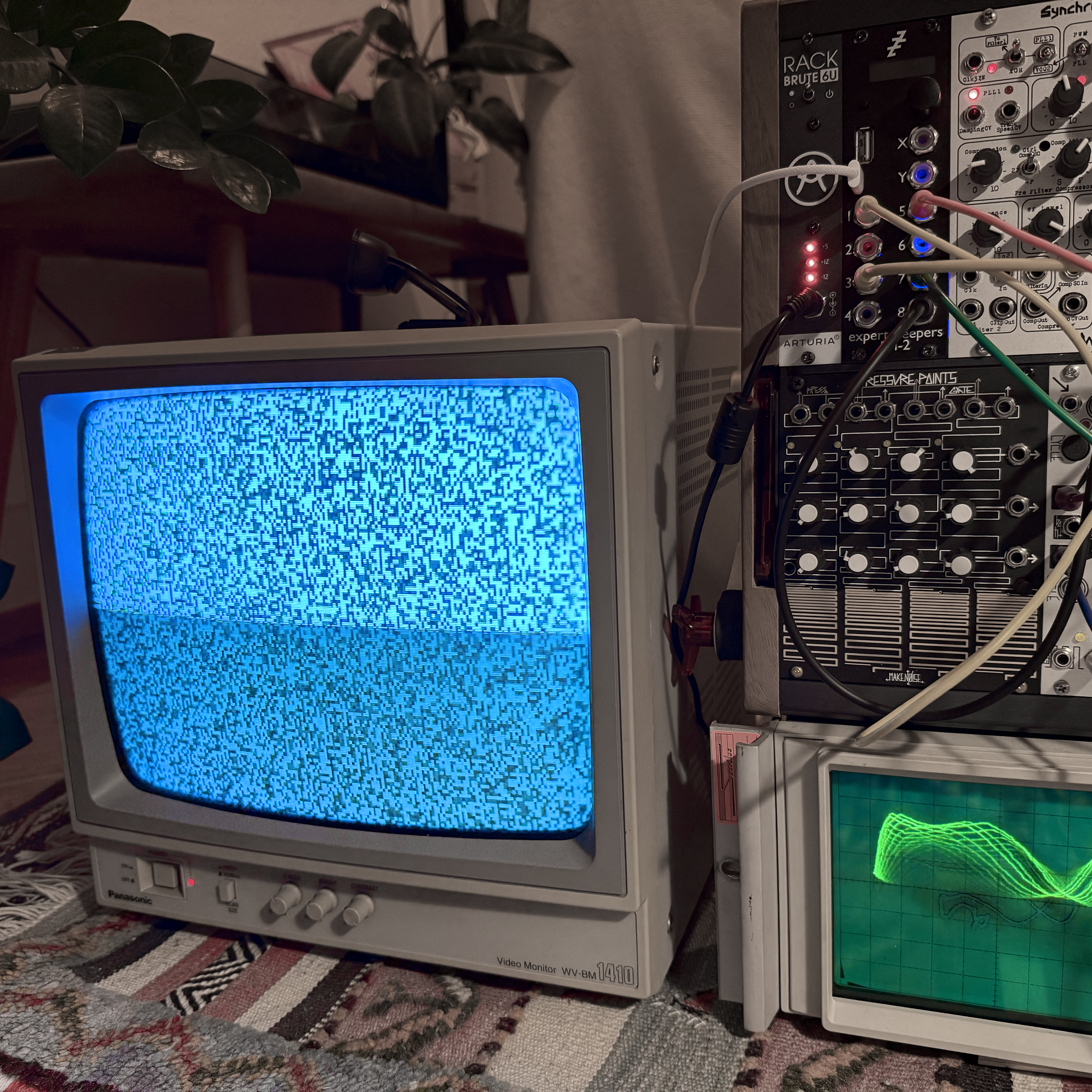
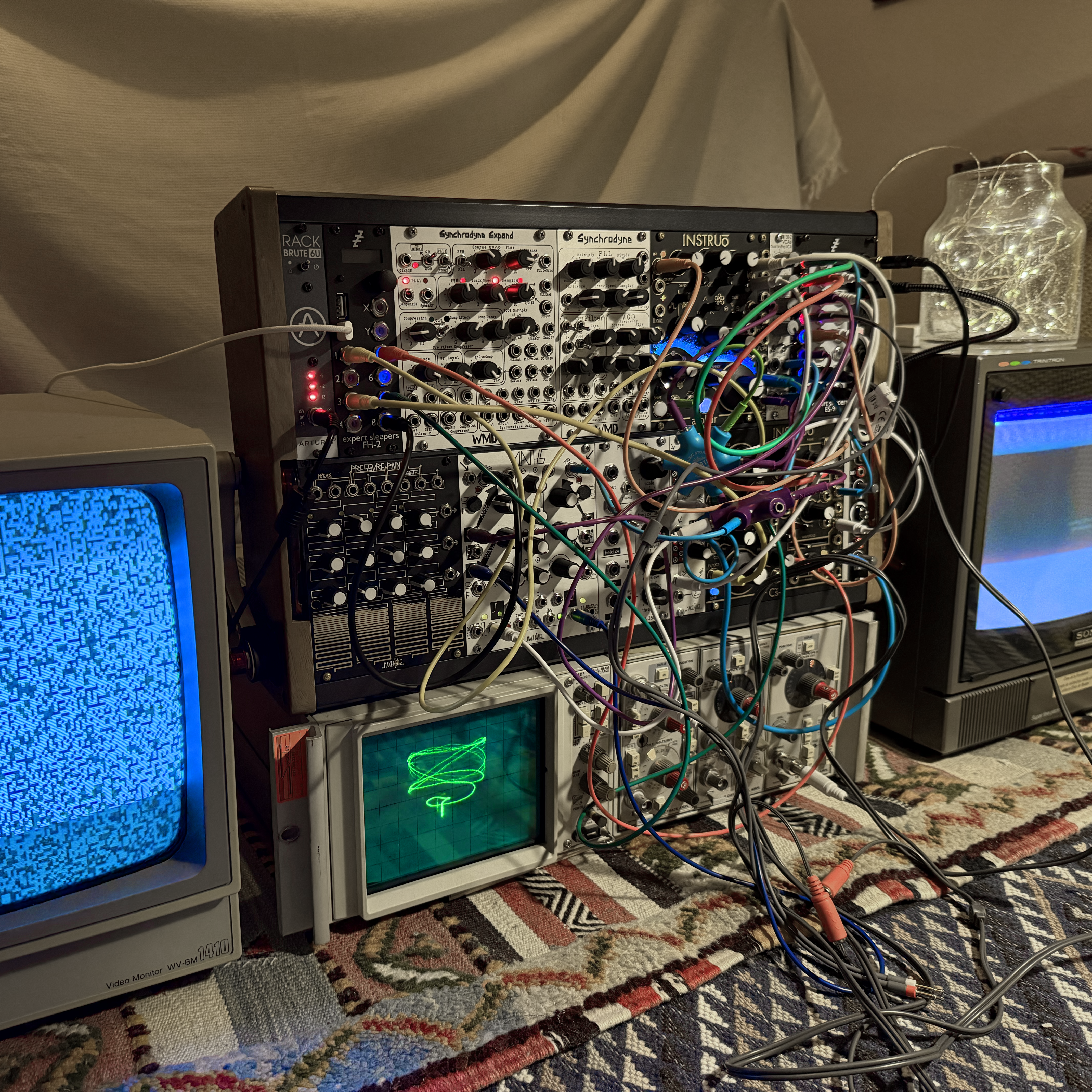
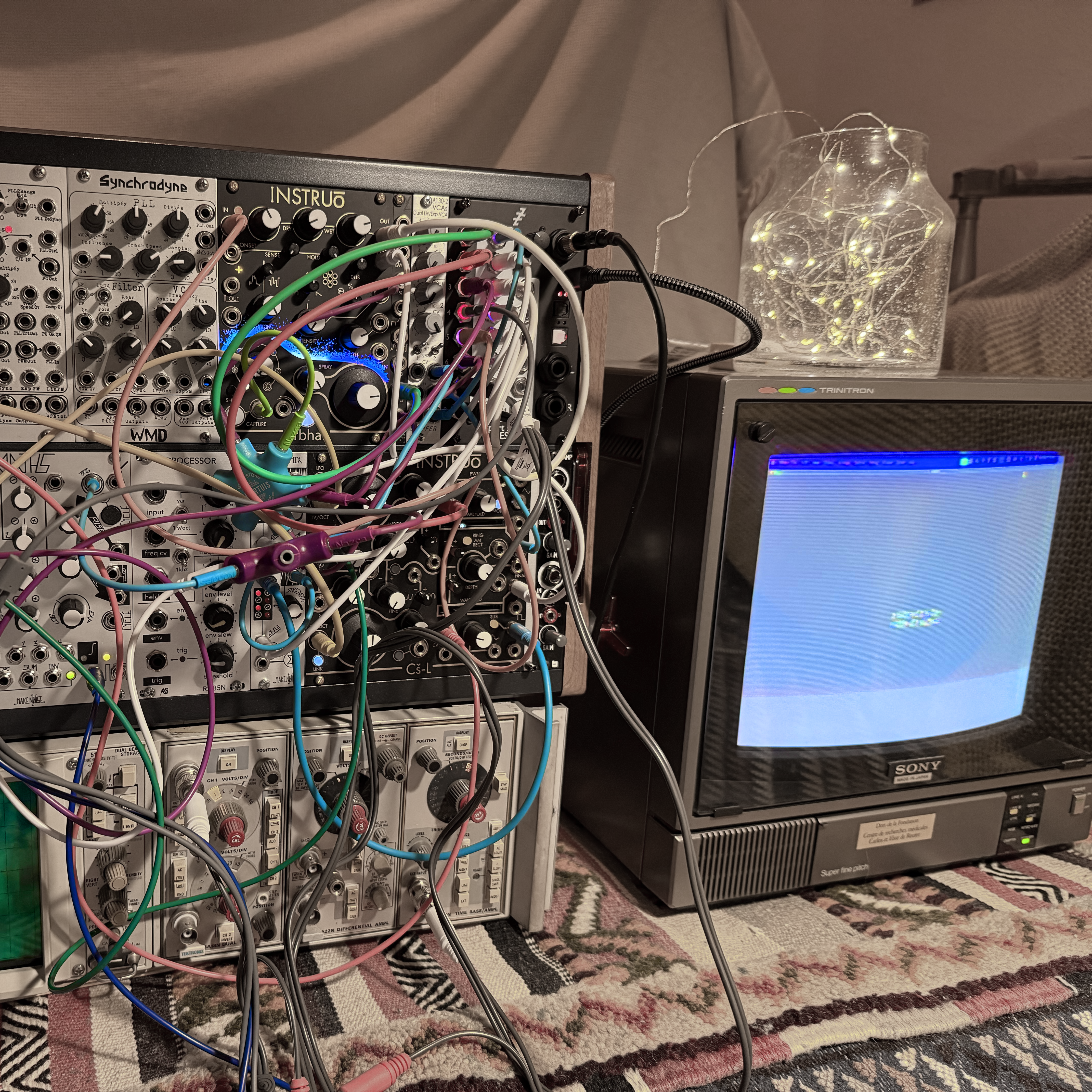
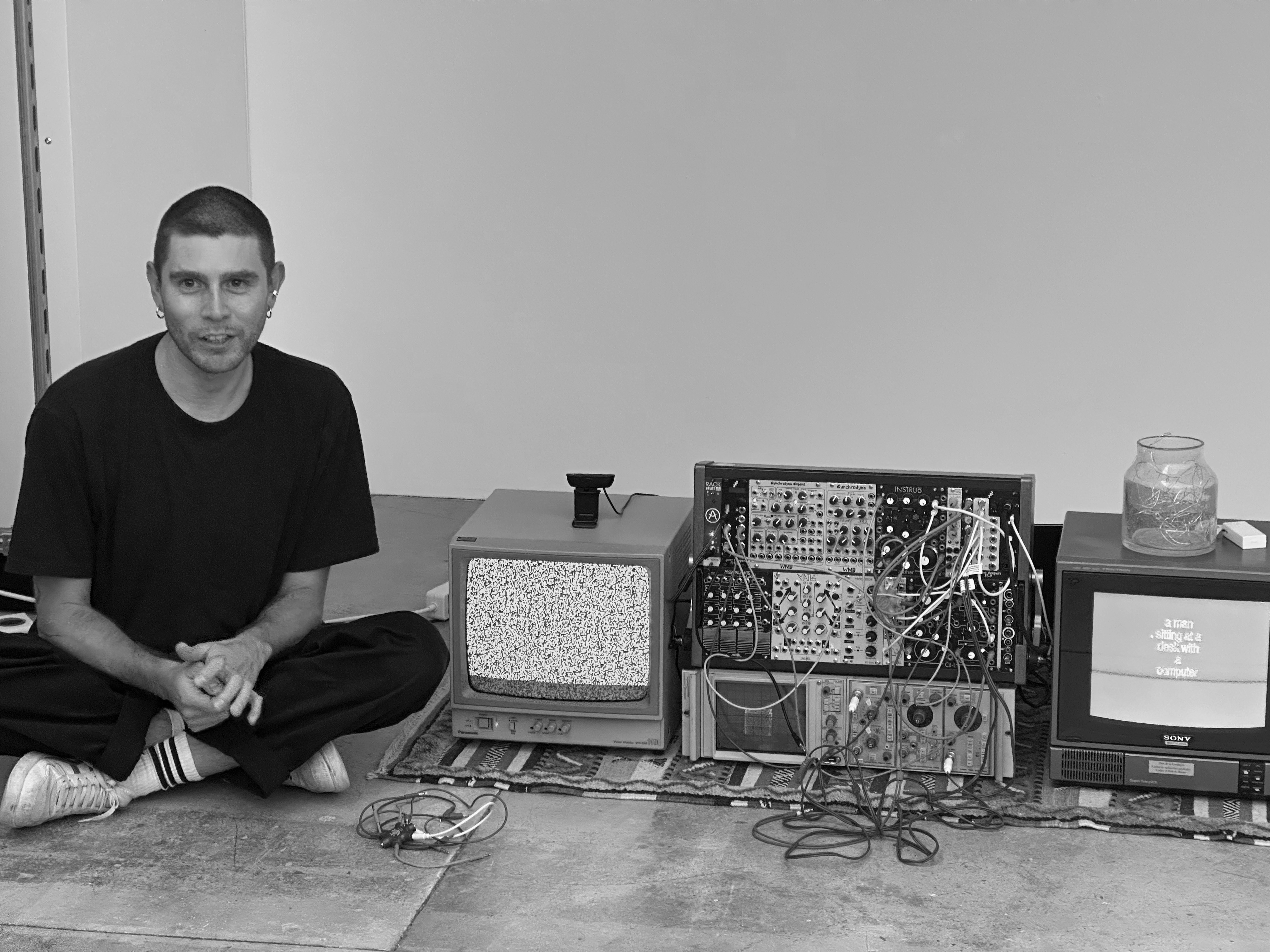
analoger_Widerstand (or analog resistance in english) is an installation that translates live surveillance images into sound and visual patterns. Using an old analog oscilloscope to visualize the sound textures, and using two CRT monitors revealing the algorithmic vision and interference.
analoger_Widerstand (2025) (Analog Resistance) transforms live surveillance feeds into sound, voltage, and machine-generated text. Instead of showing the images, each frame is reduced to simple descriptors that drive analog oscillators, whose patterns appear on a vintage oscilloscope. A machine-learning captioning module and a visitor-tracking camera feed two CRT monitors, completing the loop.
Using offline analog hardware is deliberate: its signals cannot be stored or tracked. The installation exposes surveillance while resisting its digital logic, turning monitoring into something unstable, visible, and unrecordable
Mechanism
Images from public surveillance streams are reduced to quantitative descriptors (edge density, luminance variance, dominant hue). These values drive control voltages driving analog oscillators that create sound. Then, this sounf will create analog oscilloscope patterns. A second moducle (CRT monitor) will caption the images feeded into the system using a machine learning model. Finally, a second CRT monitor will interfere with the sound and noise background when a subject is captured in the camera.
Why Analog?
Offline hardware resists frictionless capture; drift, phosphor decay and noise become expressive counter‑signals.
- Feeds → feature extraction → voltage mapping
- Pose perturbs granular noise floor
- CRT + scope visualize reduction
- No storage: ephemerality as critique
Installation Stills
In detail: Max/MSP Patch – Oscilloscope Simulation
An example of the Max/MSP patch used to simulate the oscilloscope, where the sound sources are two analog oscillators.
Function
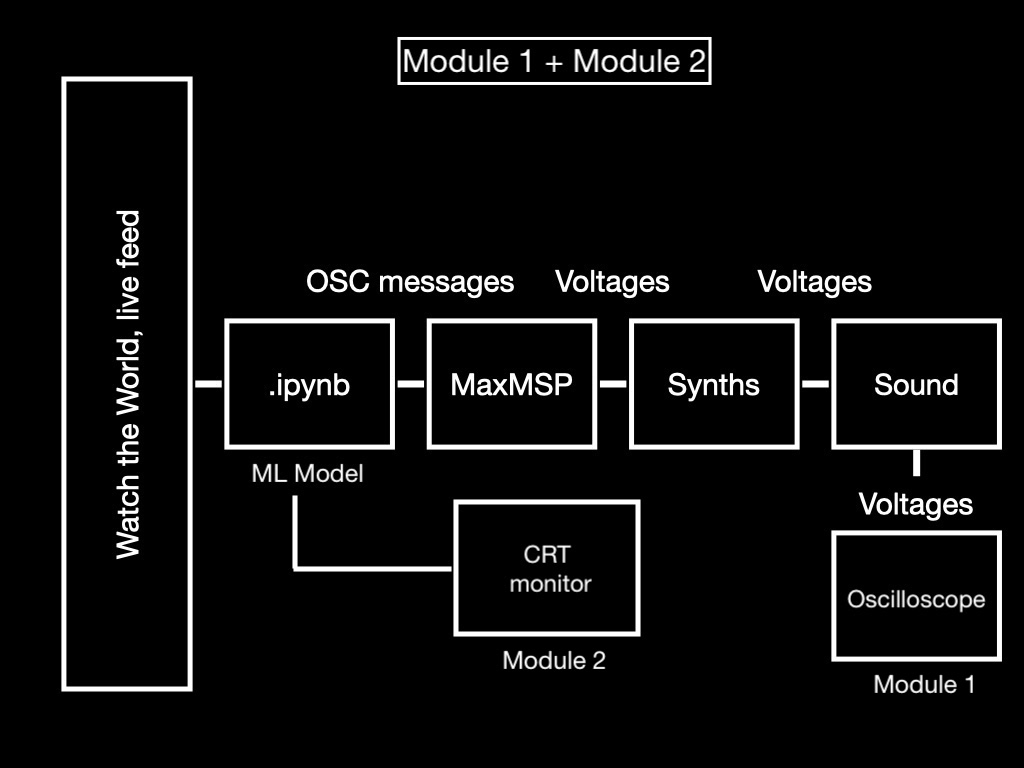
The installation takes its input from publicly accessible online surveillance streams. Rather than displaying the images, each frame is reduced to three quantitative descriptors—edge density, luminance variance, and dominant hue—which are converted into control voltages that drive analog oscillators. Their signals form shifting patterns on a vintage laboratory oscilloscope, revealing the data as pure electricity.
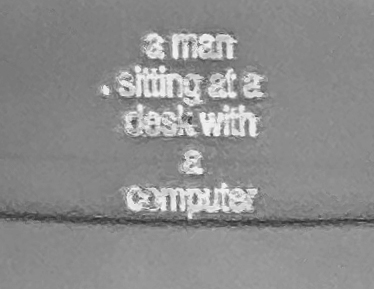
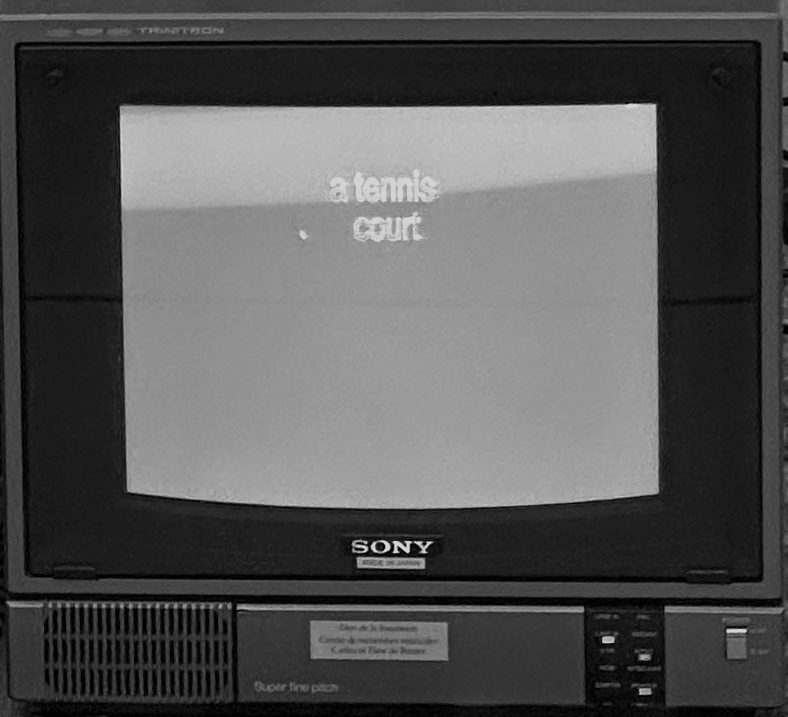
A second module uses a local machine-learning model to caption what the algorithm “sees” in each unseen frame. These captions appear on a CRT monitor, exposing only the system’s interpretation—never the source image.
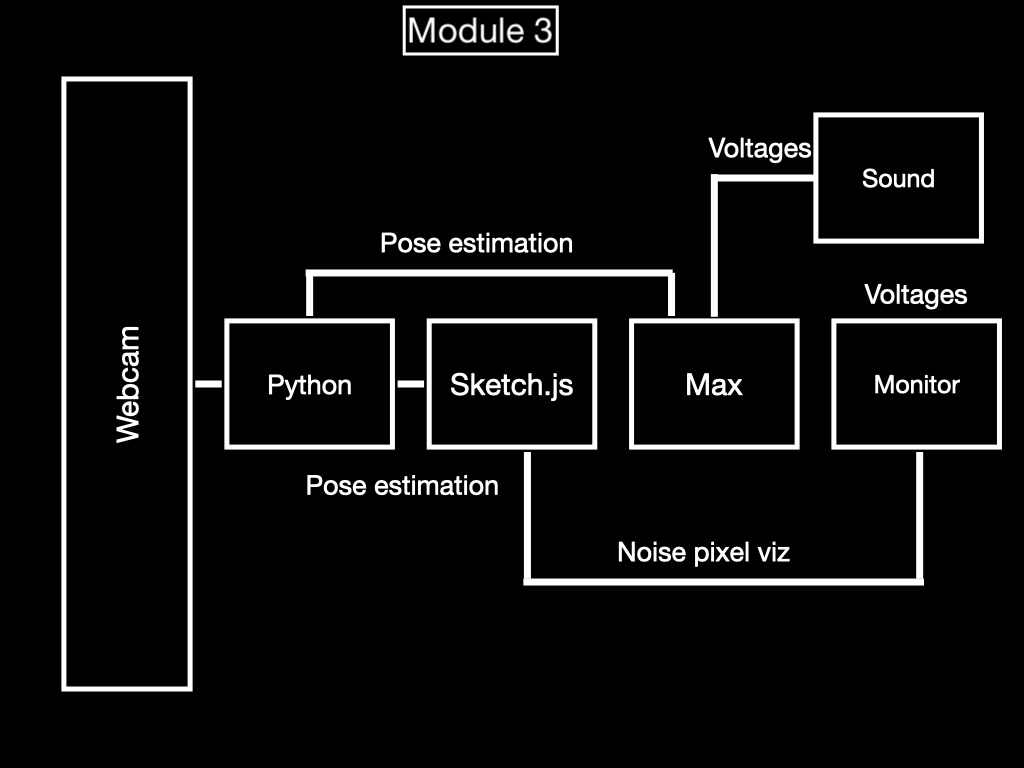
A third module employs an on-site camera to track visitors. This data modulates noise and subtle sonic textures, integrating the audience into the feedback loop. By relying on offline analog hardware, the work resists digital capture and storage—its signals exist only as electricity, phosphor glow, and sound.
Process
- Module 1: live camera feeds → feature extraction → OSC to Max/MSP → analog modular oscillators → oscilloscope.
- Module 2: live camera feeds → image streaming → ML module (AI) → machine generated captions
- Module 3: Camera → pose stimation → sound and pixel freezing
Concieved for the final project of the CAS of Generative Data Design
Presented at Hochschule der Künste Bern (HKB), Fellerstrasse 11, the 19th September 2025
In an era of ubiquitous cameras and continuous data collection, everyday acts—posting photos, walking past street CCTV, swiping loyalty cards—feed into a global surveillance network. We routinely trade privacy for convenience, often without knowing who is watching or how our data will be used. analoger_Widerstand uses reality as raw material.
### Concept
Working with analog hardware, the piece captures live feeds from publicly accessible surveillance cameras worldwide (watchingtheworld project 1). Each frame is reduced to measurable parameters—color, luminance, edge density—which are transformed into control voltages that trace moving patterns on a laboratory oscilloscope. In parallel, a local machine-learning model generates textual captions of what the algorithm “sees,” projected onto a CRT monitor. Visitors therefore hear the data through sound and read algorithmic interpretations, but never see the original images.
A second module uses an on-site webcam to capture visitor pose. This data modulates the background noise on the monitor and alters the sonic texture, creating granular shifts that make the audience a live participant in the system. In this way, the work does not merely represent surveillance but enacts it, folding the viewer into its feedback loop.
The piece shows how modern surveillance regimes compress the richness of human situations into signals and captions, turning reality into something optimized for monitoring and control.
### Resistance
At its core, the installation relies on vintage analog equipment as a counterpoint to contemporary digital infrastructures, operating outside the network’s panoptic gaze. This deliberate choice emphasizes how analog media can resist the reach of surveillance capitalism and state monitoring. Digitalization, while promising connectivity and convenience, also introduces forms of discipline and control. By remaining offline, the devices in this artwork act as rebellious outcasts—refusing assimilation into the seamless circuits of data capture. The result is an analog loop that resists storage, resists transmission, and returns to technology’s physical origins: electricity, signal, noise.
### Distortion
By translating images into voltages, the work speaks in the language of the machine: electricity. What returns from that current is never the world itself but an algorithmic distortion—a partial, fragmented version of reality. The installation makes this gap tangible: visitors witness how the machine reconstructs only pieces of the world, presenting not truth but data-driven representation. In exposing electricity as medium and reduction as method, the piece invites reflection on who controls the narrative and what is lost when machines mediate our experience.
### …
Ultimately, analoger_Widerstand is an analog rebellion—a work that confronts audiences with the politics embedded in data collection and machine vision, and asks them to reckon with the systems that watch, classify, and shape their lives.